

Once On Social Security How Much Money Can You Make Working?
3 Major Mistakes That Could Shrink Your Social Security Checks
Are you at risk of fashioning these income-reducing errors?

Key Points
- Maximizing Societal Security checks is smart because the income from them is guaranteed throughout retirement.
- Sometimes, people inadvertently reduce their benefits.
- IT's great to know how your decisions can affect the amount of money Social Security provides.
Maximizing your retreat income can give you more security later in life. This is particularly true of Social Security checks, which are guaranteed to last until you hand out and are secure against splashines.
Regrettably, many people inadvertently shrink their checks and concentrate this important endorse source, rather than maximizing it.
There are three common mistakes that could leave you with little Social Security money than you were hoping for, all of which you'll desire to be certain to void.

Image generator: Getty Images.
1. Not correcting errors on your earnings tape
Your earnings record is the single most most-valuable factor in determining how much money you'll get in Social Security benefits. That's because benefits are based on the average wages attained during the 35 years your pay back was highest afterward adjusting for rising prices.
If your net record is inaccurate and you don't get credit for altogether the money you made, benefits volition embody lower. You can even up mistakes on this record, but you will need documentation, and it's easier to make fixes if you discover the error soon after it was ready-made than if you waitress until decades later. That's why it's a huge error not to confirm your wage was reported correctly to each one year.
Fortunately, checking your earnings record is easy. Just signalise in at mySocialSecurity, and you can see what the Social Security Administration has recorded for your pay over the course of your career to date.
2. Enrolling New in Medicare and getting stuck with higher premiums
Signing up for Medicare late can result in a penalty if you don't have coverage as soon as you become eligible. E.g., the Medicare Part B penalty butt total 10% for each 12-month period you could've had coverage but failed to contract.
The longer you wait to get covered, the high the penalty -- and the added costs last for life. Since Medicare premiums are typically salaried direct out of your Social Security checks, high premiums mean that your retirement benefits will equal littler. Make reliable you empathize Medicare eligibility rules and key deadlines, so you sign up for benefits along time to avoid this huge mistake.
3. Working less than 35 years
As mentioned supra, benefits are based on the average wages over a 35-yr period. This raises a discover question: What happens if you don't have much a interminable mold history?
Unluckily, if you don't have a career that spans 35 years, the Social Security benefits pattern still remains the same. You just death up with some $0 wage eld included in your reckoning. These force out drag down your average remuneration and result in a littler monthly benefit.
The solely fashio to avoid this would represent to work for the requisite time. Now, you hindquarters get benefits symmetrical with a shorter work history. You can become eligible after just 10 years of working -- as long as you make enough of those 10 days to take in the maximal "work credits" apiece year. Just the shorter your career, the bigger the impact on your every month benefit.
This is definitely the hardest err to ward of. But if you'atomic number 75 a twelvemonth or two short, you could simply stay on the job for longer before receding. Fortunately, it's much easier to on a regular basis check your earnings history and go for for Medicare prompt, thus you can avoid at least some of these benefit-shrinking moves.
Multicoloured Fool Returns
Stock certificate Adviser S&adenosine monophosphate;P 500
592% 144%
Join Stock Advisor
Discounted offers are only available to new members. Shopworn Advisor leave renew at the then current number price. Fund Advisor list price is $199 per year.
Blood line Adviser launched in February of 2002. Returns as of 01/11/2022.
Cumulative Maturation of a $10,000 Investment in Stock Consultant Calculated by Time-Adjusted Retort 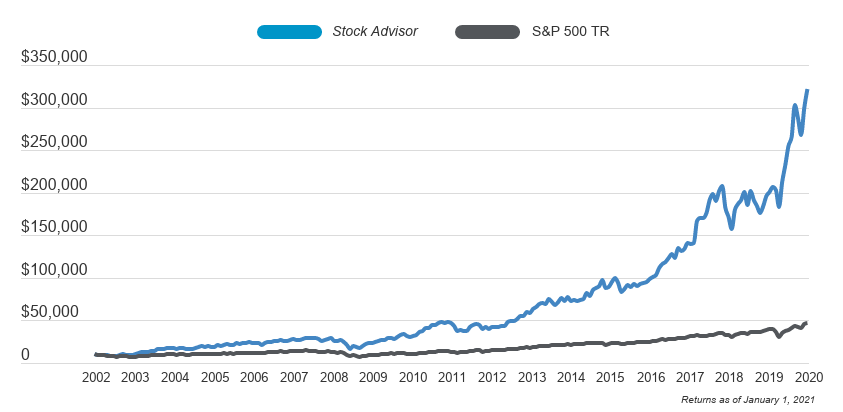
Related Articles
- Is 2022 Your Year to Claim Social Security? Find Call at 3 Questions
- Seniors on Social Security Whitethorn Irritate Keep down More of Their 2022 Benefits for This Reason
- Dream of Early Retirement? 4 Shipway to Flourish in 2022
- Here's the Earliest Date to Give in Your 2022 Tax Give back
- I Didn't Invest Until Age 33. 5 Things I Did to Make water Up for Lost Clip
Once On Social Security How Much Money Can You Make Working?
Source: https://www.fool.com/investing/2022/01/10/mistakes-that-could-shrink-social-security-checks/
Posted by: kirschbaumherradis.blogspot.com
0 Response to "Once On Social Security How Much Money Can You Make Working?"
Post a Comment